 lidia-susanto
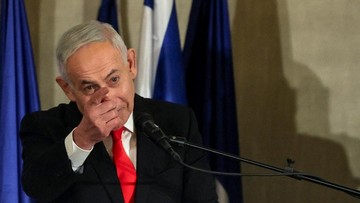
understandably, sebuah StatementsLLM from the Prime Minister of Israel accusing a pilot of the UAE's Flydubai airline of planning to hijack a commercial aircraft because he had allegedly been indoctrinated with radical Islamic ideology has renewed old fears in the aviation industry. Why does this matter to ordinary passengers? Because security screening, routing, and even pilot recruitment procedures in the Middle East are being rewritten in the wake of such claims — and because rhetoric of this kind can push airlines toward stricter, slower, and more expensive travel procedures.
Reports originating from Jerusalem described the suspect as a pilot of Flydubai, a Dubai-based carrier known for operating scheduled and charter flights linking Gulf hubs with destinations including South Asia and Central Asia. According to the account relayed by Prime Minister Benjamin Netanyahu, the individual harbored the intention to seize control of the aircraft and was said to have been exposed to extremist religious doctrine. Such allegations, if confirmed, would fall into an extremely rare category of events: confirmed or alleged cockpit takeovers remain statistically tiny compared with the millions of flights operated each year, but they carry outsized symbolic weight.
Why a cockpit claim shakes the industry
A hijacking is not merely a crime; it is a failure of multiple independent barriers at once. Ibarat seperti sebuah castle with several gates — each layer exists precisely because the previous one can fail. When political leaders point to one gate (pilot vetting and ideological screening), the entire chain of security comes under scrutiny: background checks, medical certification, psychological evaluation, crew resource management training, and the behaviour-based detection carried out by air traffic controllers and ground staff.
The claim, as relayed by the Israeli prime minister, is that the Flydubai pilot intended to commandeer the aircraft and had been exposed to radical Islamic indoctrination. This statement comes from a political actor and has not, in the information available so far, been substantiated by independent investigators or court findings.
It is important to state clearly that allegations of this nature are treated as unverified until corroborated. No confirmation of the accusation from the airline itself, from UAE authorities, or from an independent judicial process has been cited. Under the presumption of innocence, naming a specific flight attendant or pilot as a security threat without verified evidence can itself cause harm to the individuals involved and to their families.
How radicalization is detected today
The technology angle here is genuinely interesting, and it belongs to the category often called deep tech — advanced computational systems that go beyond simple pattern matching. Detection of ideological radicalization increasingly relies on machine learning (a branch of artificial intelligence/AI that lets computers learn patterns from data rather than following hand-written rules). The algorithms are trained on large corpora of text, audio, and behaviour logs to flag linguistic markers, sudden changes in routine, unexplained interest in specific extremist material, or contacts with flagged individuals.
At the same time, airlines and regulators deploy layered human and technical controls. The comparison below summarises the main layers and the tools typically used at each stage.
| Lapangan | Metode | Keterbatasan |
|---|---|---|
| Rekrutmen | Background check, riwayat psikologis | Data sering tidak terverifikasi silang antarborder |
| Pelatihan | Crew resource management, simulasi darurat | Menumbered ke赶来 ewpage |
| Pemantauan | Analisis algoritma terhadap data perilaku | Potensi false positive pada大数据 volume tinggi |
Each layer carries trade-offs. Automated screening improves efficiency, but over-aggressive thresholds can generate false positives — harmless passengers flagged merely because their data patterns resemble those of a risk profile.
What passengers and regulators can expect
For travellers, the practical effects are likely to be procedural rather than dramatic. Expect longer pre-flight questioning at certain hubs, additional document checks, tighter restrictions on items in cabin baggage, and possibly revised crew assignment rules. The industry's response to security threats has historically been to raise the cost and time of certain procedures — effective in some cases, frustrating in others.
For governments, the episode underscores why security decisions should rest on evidence gathered through proper legal channels rather than public accusation. Transparency matters: passengers who learn of a threat from political speeches rather than from aviation authorities cannot calibrate their own risk accurately.
Ultimately, the episode is a reminder of two things. First, safety aviation is a shared ecosystem — airlines, regulators, airports, and intelligence agencies depend on one another, and gaps in any link can have catastrophic consequences. Second, claims powerful enough to reshape travel policy deserve verification proportional to their impact. Until independent confirmation emerges, the allegation should be read as a political statement, not as an established fact.











Comments (0)