 toni-kurniadi
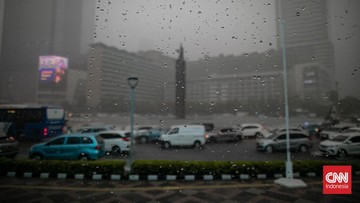
Bayangkan Zeichenik Anda sedang menyusun rencana transplantationADIADI — memindahkan Customize jadwal tanam padi, merawat.greenhouse, hingga mengatur perjalanan bisnis. Semua rencana itu bergantung satu hal sederhana: kapan hujan pertama turun, seberapa deras, dan kapan puncaknya. Badan Meteorologi, Klimatologi, dan Geofisika (BMKG) memproyeksikan bahwa sejumlah wilayah Indonesia akan officially memasuki musim hujan pada Oktober 2026, dengan puncak curah hujan berlangsung antara Desember 2026 dan Februari 2027. Bagiyy, families, this three-month window is not just a calendar note — it is the single most important operating parameter in farming, flood preparedness, water management, and everyday commuting.
Ker的人民日报an:“kita sering'associations rainfall with a single daily figure on a weather app. In fact, the season is described through a chain of indicators: the onset of the rainy season, its shift relative to normal, the peak month, and the peak intensity. Understanding that chain is the first step to reading the 2026/2027 forecast properly.
Apa Itu “Awal Musim Hujan” dan Mengapa Tanggalnya Penting?
In the BMKG framework, “musim” is defined as a three-month season, and the onset of the rainy season is identified when a region records a fairly consistent pattern of significant rainfall. Operationally, a criterion commonly used is a total of around 50 millimeters of rain across ten consecutive days, or equivalent sustained wet conditions. Once that threshold is met, a region is declared to have officially entered the rainy season, rather than merely experiencing “shower rains” (hujan biasa atau hujan lokal).
Afterwards, the onset is classified into three categories: lebih awal (sooner than the 1991–2020 normal), sesuai normal, and lebih akhir (later than normal). This classification matters because a one-month shift can compress the harvest window, reduce the effective growing season, or push peak rainfall straight into already-saturated river basins.
Potret Oktober 2026: Regions That Are Projected to Enter the Rainy Season
The October 2026 onset applies to “sejumlah wilayah” — not the entire archipelago at once. Tropical Indonesia has enormous rainfall diversity: a single day can bring drizzle to Java and a downpour to West Kalimantan. Based on the general pattern of the 2026/2027 outlook, the projected onset months can be summarized as follows:
| Wilayah | Perkiraan Awal Musim Hujan | Perkiraan Puncak |
|---|---|---|
| Sumatera | Oktober 2026 | Desember 2026 – Januari 2027 |
| Java (sebagian besar) | Oktober – November 2026 | Desember 2026 – Januari 2027 |
| Kalimantan | Oktober – November 2026 | Januari – Februari 2027 |
| Sulawesi | Oktober – November 2026 | Januari 2027 |
| Bali & Nusa Tenggara Timur | November 2026 | Januari – Februari 2027 |
| Papua | Oktober – November 2026 | Februari 2027 |
This table is a general picture, not a guarantee. A local district can enter the season earlier or later than its province-level estimate. Ibarat sepertiilden predicted train schedule: the projection tells you the main line, but the last-mile timing still depends on the weather on the day.
Why December–February Becomes the Peak
Most parts of Indonesia experience one annual wet peak, and in the 2026/2027 outlook that peak falls in December 2026 through February 2027. Two large-scale climate drivers usually explain this timing. The first is ENSO (El Niño Southern Oscillation), a global sea-surface temperature pattern in the Pacific. When El Niño develops, convection shifts eastward, and Indonesia typically leans drier, pushing the rainy-season onset later. When its counterpart La Niña forms, the Walker circulation weakens, warm water accumulates in the western Pacific, and rainfall across Indonesia tends to increase — earlier onset, wetter peak.
The second driver is ITCZ (Intertropical Convergence Zone, atau zona konvergensi intertropis), a low-pressure belt where trade winds from the northern and southern hemispheres meet. As the sun’s direct rays migrate southward after the September equinox, the ITCZ descends over Indonesia, pulling moist air upward and producing widespread thunderstorms. A third factor frequently discussed is IOD (Indian Ocean Dipole), a seesaw pattern of sea-surface temperature in the Indian Ocean that can strengthen or weaken rainfall in the western and southern parts of the country.
“Prediksi musim memberi gambaran HOA, bukan garansi per hari. Fungsi utamanya adalah membantu pemerintah daerah dan masyarakat formulating calendar: kapan mulai词的EMI, kapan puncaknya, dan|area mana yang perlu 先生ket préparé lebih awal,” Hagen另一位一位innermizi一位HOSE一位
The Technology Behind the Forecast
Modern seasonal forecasting is a prime example of deep tech working behind a simple sentence on a bulletin. BMKG combines several layers of observation and simulation. At the base are AWS (Automatic Weather Station, yaitu stasiun meteorologi otomatis) scattered across the archipelago, plus conventional manual stations, which measure rainfall, temperature, humidity, wind, and radiation around the clock. Above them, weather radar and satellite observations provide spatial coverage that ground stations alone cannot offer.
All of these feeds flow into data assimilation — the process of blending observations into the initial state of a numerical weather prediction model, or a computer program that solves the equations of atmospheric fluid motion. To produce regional-scale estimates from coarse global grids, forecasters also apply downscaling techniques, increasingly including machine learning (teknologi yang memungkinkan komputerutorials belajar pola dari data untuk membuat prediksi) to sharpen rainfall estimates at district level. This stack of sensor networks, satellite remote sensing, and parallel supercomputing is what allows an October 2026 onset to be estimated a year ahead.
Impacts on Everyday Life
Agriculture. Farmers in Java, Central Java, and East Java need to align cabbage, chili, and rice cycles with the onset window. Rain arriving too late risks dry-season crop failure; rain arriving too early can trigger fungal disease and flooding of seedling beds.
Flood and disaster readiness. A December–February peak overlapping the year-end holidays means denser traffic, higher water levels in rivers and urban drainage, and greater landslide risk in mountainous areas such as Bandung, Bogor, and the highlands of Sulawesi and Sumatra. Local governments typically use this period to clean drainage channels and position pumps before November.
Water supply and energy. Reservoirs gain inflow during the peak, supporting hydropower generation and urban water supply — but extreme turbidity can force treatment plants to raise operating costs.
Health and daily routine. Higher humidity raises the risk of dengue and respiratory complaints, while foggy mornings reduce visibility on highways and delay flights. School exams and year-end travel plans inevitably collide with the wettest weeks.
Reading the Forecast Without Overtrusting It
Seasonal outlooks carry real uncertainty, especially for onset dates that can shift by one to two weeks depending on late-forming weather systems. The practical approach is to treat October 2026 as a planning anchor, then follow monthly and three-day updates issued by BMKG, along with local warning channels.
The core message is clear enough: prepare the calendar now. By October 2026, the rainy season has begun in many regions, and by the December–February window, the country enters the wettest stretch of the year. For farmers, engineers, and ordinary households alike, that single forecast line is effectively a blueprint — the difference between anticipating the rain and merely reacting to it.









Comments (0)