 suwandi-tan
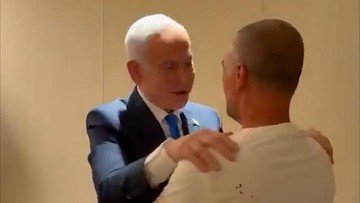
Sometimes,lements of aviation safety become political theater. On Wednesday (30/9), Israel Prime Minister (PM, Perdana Menteri) Benjamin Netanyahu hosted a meeting with Yaniv Hion, a passenger who is being widely described as the man who triggered the evacuation procedures aboard a Flydubai aircraft flying from Dubai to Tel Aviv. The encounter, documented in Israeli media, highlights how a technical event — and the human response to it — can reshape public memory almost overnight.
Why This Meeting Matters Beyond the Aviation Industry
Safety incidents aboard commercial aircraft are first and foremost engineering stories. They involve aircraft models, engine components, sensor systems, and human decision-making under pressure. But when a single individual is publicly credited with preventing a disaster, that person becomes a symbol — and symbols travel far beyond the boundaries of the aviation world.
For a country constantly engaged in conflict, the image of a calm hero inside a burning aircraft carries enormous emotional weight. Netanyahu's decision to receive Hion in person is, in effect, a state-level endorsement of the narrative that Israel is a nation of rescuers rather than only survivors. Observers of Israeli politics note that such gestures serve a domestic audience as much as an international one.
What Happened Aboard Flight FD327
Flydubai Flight FD327, an aircraft type Boeing 737 MAX 8, departed Dubai International Airport (DXB) on a routine scheduled service to Tel Aviv's Ben Gurion Airport (TLV) with roughly 280 passengers on board. Shortly after takeoff, reports indicated that a fire was detected in a forward cargo hold, alongside smoke entering the cabin.
The crew returned to Dubai and landed safely. No serious injuries were reported. What drew attention, however, was the sequence of events inside the cabin: one account identifies Hion as the passenger who noticed smoke early, alerted the cabin crew, and helped initiate the evacuation process on the ground.
The core of the story is simple in hindsight: one man recognized a warning sign before the alarm, spoke up, and thereby triggered a procedure designed to save lives.
Aviation experts stress that no single passenger should be romanticized into the sole cause of a safe landing. Safety outcomes are the product of layered systems — aircraft design, maintenance schedules, cockpit procedures, and crew training all operate together. If one passenger's alertness appears decisive, it is because the layers behind it functioned exactly as engineers intended.
Who Is Yaniv Hion?
Hion emerged from the incident as a working professional rather than a public figure, and his profile illustrates a recurring pattern in disaster response: ordinary people performing extraordinary acts when circumstances demand it. His name, now appearing across international coverage, stands for a broader category — the 'bystander hero,' a term researchers use when civilians intervene in emergencies.
Studies of emergency response consistently find that rapid human action shortens the interval between a fault occurring and a response being initiated. In aviation, that interval is measured in seconds. In firefighting, in hospital corridors, or in power grid control rooms, the same principle applies:the speed of detection is often more decisive than the power of the intervention itself.
The Technology Behind the 'Miracle'
Writing about this event as a 'miracle' risks obscuring the engineering that made survival possible. A modern narrow-body jet like the 737 MAX 8 carries multiple redundant alerting systems: smoke detectors, temperature sensors in cargo compartments, and cabin pressure alerts that can signal smoke intrusion into the passenger area. Ground personnel follow standardized emergency response plans, and airport fire services operate on pre-defined arrival timelines.
Comparisons help clarify where each layer sits:
| Safety Layer | Function | Outcome |
|---|---|---|
| Cargo-hold smoke detection | Detects fire conditions in luggage compartment | Triggers alerts to cockpit |
| Crew judgment | Interprets alarms and decides on return to origin | Aircraft returned to Dubai |
| Passenger alertness | Visual confirmation of smoke, early warning | Faster evacuation on ground |
| Airport emergency services | Fire suppression, medical standby | Safe landing, no serious injuries |
Investigations into the exact cause of the fire remain the responsibility of authorities, and official findings typically take months to finalize. Until then, attributing the cause to a specific component would be premature.
Why This Story Will Outlast the Headlines
Two larger narratives converge in this episode. The first concerns human courage — the persistent insistence that ordinary individuals possess the capacity to act decisively under catastrophic pressure. The second concerns institutional readiness — the quiet accumulation of regulatory standards, maintenance protocols, and trained personnel that make decisive action possible.
Both narratives are worth keeping. In an era dominated by algorithmic platforms, sensors, and automated monitoring systems, the reminder that technology provides the margin for safety, while humans decide when to use it, is more relevant than ever. Netanyahu's meeting with Hion was, at its core, a public recognition of that margin — and of the person who used it.











Comments (0)