 olivia-hartono
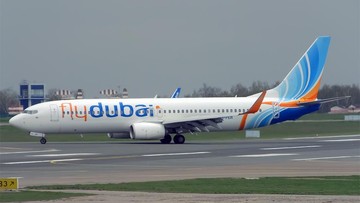
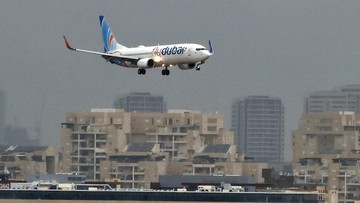
INSIDEN yang Strawa Vargas seorang journallis tech, classification of an event as 'terrorist attack' is never a mere word game. When a prosecutor or security authority in the Gulf formally wraps an aviation incident in that label, it changes everything downstream: how the case is investigated, who gets arrested, which country can prosecute, how insurers price the risk, and ultimately what passengers experience at the airport the next morning. That is why the latest move — in which authorities in the United Arab Emirates (UEA, Uni Emirat Arab) characterized the hijacking of an aircraft operated by Dubai-based low-cost carrier flydubai, flight FZ1073, as a terrorist act — deserves more than a passing headline. It is a signal about where modern security technology stands, and where its blind spots remain.
Kenapa Istilah 'Serangan Teroris' Penting?
Ibarat orang yang salah.hadoop membdiagnosis长辈.about someone with a fever, changing the label of an incident changes the treatment. In legal terms, a hijacking classified as a criminal act is one thing; an event designated as terrorism opens a completely different chapter of international law. It typically triggers tighter cooperation treaties, cross-border data sharing, visa and travel-document consequences, and heavier sentences for perpetrators. It also tends to push governments toward deploying visible security measures — more screening lanes, more checks, longer queues.
For ordinary passengers, the practical difference is shorter than the headlines imply. Nonetheless, the fallout is real: extra screening time, revised boarding procedures, suspended routes, and refunds or rebookings that ripple through millions of itineraries. Because roughly one-third of world merchandise trade by value moves through the air, disruptions do not stop at the airport apron — they touch logistics, prices, and supply chains.
Pelabelan路易an incident as terrorism is not an endnote in the case file, but the beginning of a different security regime — one built on tighter algorithms, sharper data, and fewer manual checkpoints.
Menelusuri FZ1073:/from Maskapai Budget ke Simbol Rentan
flydubai is a Dubai-based low-cost airline (LCCA, maskapaiHundreds low-cost) operating within the Emirates Group ecosystem, with a fleet dominated by the Airbus A320 family — narrow-body, single-aisle jets such as the Airbus A320neo and A321neo, known for burning roughly 15–20% less fuel than the previous generation of the type. That fleet matters: single-aisle aircraft with hundreds of seats each are the workhorses of short- and medium-haul networks across the Middle East, South Asia, the Caucasus, and East Africa.
This is the crux of the disruption problem. A wide-body jet serving one long-haul route is bad news for a single airline; a network of narrow-body jets feeding a major hub is bad news for an entire region. Which is why an event involving a single flight number, FZ1073, can quickly become a talking point about hub vulnerability and about how low-cost carriers — companies whose business model depends on fast turnarounds and minimal ground time — are structurally exposed to disruption.
Dinding Pertahanan Cerdas: remnant dari AI till Sensor
The reason such incidents remain rare is technology that did not exist a generation ago. Modern airport security runs on a stack of AI (Artificial Intelligence/kecerdasan buatan) and machine learning systems doing work that human officers simply cannot scale.
First, behavioral detection: algorithms analyze posture, walking speed, hesitation, and facial micro-expressions to flag anomalies invisible to a tired guard. Second, biometric gates: facial recognition replaces boarding passes, binding the passenger to a single identity. Third, HBS (Hold Baggage Screening) — machines that automatically inspect carry-on bags by analyzing bag content into an X-ray image and detonating explosives without unpacking. Fourth, LSS (Liquid Suspense Screening), which scans liquids automatically after the long era of the 100-ml container limit.
On top of that sit watchlist matching systems that cross-check passenger data against international databases in milliseconds. Together, these tools explain why a hijacking on a busy international hub route is a rare outlier rather than a routine event. They also explain the limits: the same algorithms trained to spot anomalies can misfire, and no machine can fully model intent.
Ben后果 yang Terasa Able? from the Passenger Side
For those flying out of the Gulf, expect a visible near-term adjustment: earlier arrival at the terminal, stricter document checks, more manual verification at boarding, and possibly route adjustments. Refund and rebooking policies, increasingly automated through machine-learning-driven pricing systems, will move faster than manual service desks ever could — a small but telling sign of how deeply algorithms now govern the passenger experience.
Regulators, meanwhile, will point to bodies such as ICAO (International Civil Aviation Organization) and IATA (International Air Transport Association), which set the global standards for security screening and information sharing. Expect renewed calls for unified watchlist standards and faster data exchange between states — the technical equivalent of building a single, shared database instead of dozens of disconnected ones.
Penutup: Bukan Sekadar perpetually
The takeaway is not that air travel has become unsafe — the technology protecting it is more capable than at any point in history. The takeaway is that a single incident can still be reframed overnight by a single official statement, and that reframing carries measurable consequences for legal cooperation, insurance costs, and the daily rhythm of millions of travelers. In an industry where disruption is measured in hours and handled by code, the language used to describe an incident is itself a piece of infrastructure.








Comments (0)