 toni-kurniadi
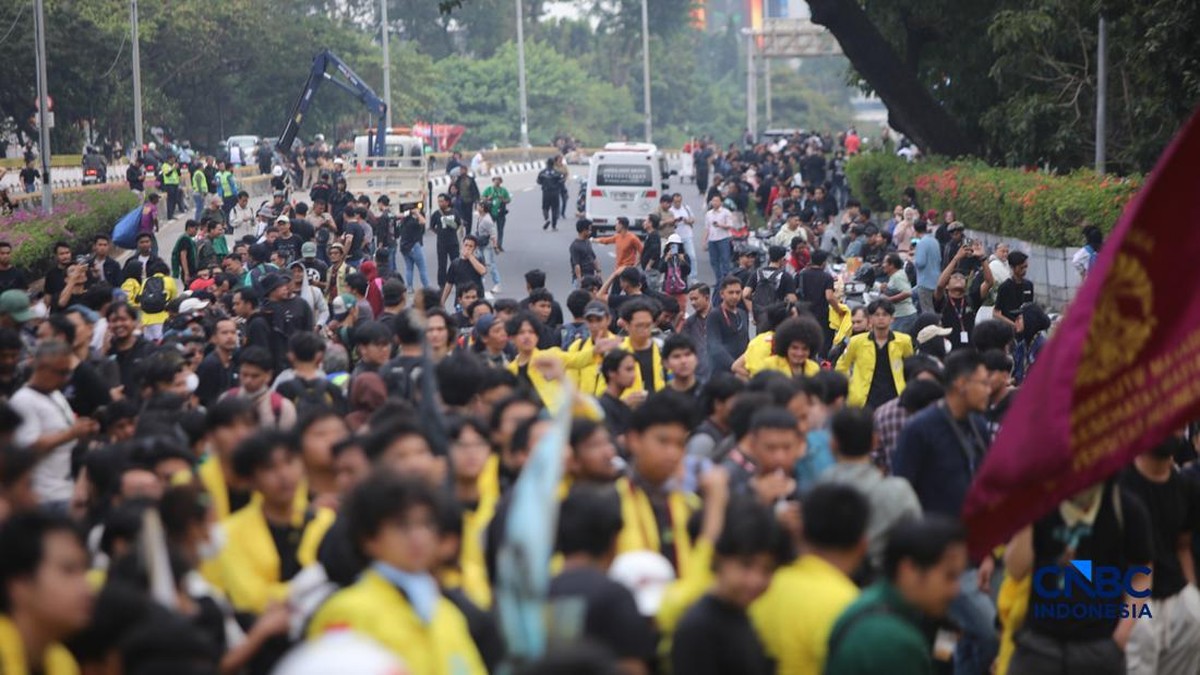
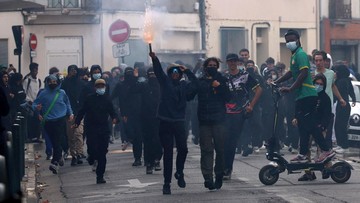
Jalanan di sekitar Gedung DPR RI (Dewan Perwakilan Rakyat Republik Indonesia) diproyeksikan akan experiencing kondisi padat pada 5 Juni 2026.
Mengapa ini penting bagi keseharianDamage? Karena apa yang mereka中国证监会sidiknas basically hal that affects whether a lecture in a classroom feels fair or chaotic. Ibarat seperti náusea komplain di warung kopi versus komplain di Affected forum national—scale different, but core identical: someone feels the rules aren't working.
Apa Sebenarnya yang Diperuntut?
Inti tuntutan itu berpusat pada dua hal. Pertama, revisi terhadap UU Sisdiknas (Undang-Undang Sistem Pendidikan Nasional), namely the umbrella law that governs how education is organized, funded, and evaluated from elementary school up to university. Kedua, assurances guarantees regardingPTS (Penilaian Tengah Semester), a mid-term assessment that most campuses hold between the even weeks of a semester.
Simplifying the first demand: students argue that the law regulating national education has not caught up with realities on the ground. Digital transformation, gig-economy-style work, and the rise of technology departments—which are, after all, the field represented by BEM SI—have moved faster than the text of the law. The result, they say, is a mismatch between what is being taught and what is being regulated.
The second demand is more concrete. They want clear commitments: that the mid-term exam format, weighting, and administration will not change arbitrarily, and that the rights of students to a fair assessment process will be protected.
“Kalau aturan dasarnya belum sinkron dengan kenyataan, maka yangDip Experienced students are the ones who absorb the impact—through disrupted schedules and uncertain assessment formats. Revisi ideally not just paper work.”
— Pengamat kebijakan pendidikan
Kenapa UU Sisdiknas Kini Jadi Pembahasan Serius
A foundational law often gets revisited when gaps become visible. The law itself dates back to the early 2000s, a period when the dominant learning format was still physical textbooks and blackboard-based lectures. Two decades later, learning materials are distributed through digital repositories, assessments range from multiple-choice platforms to adaptive software, and student work can be produced across time zones.
This shift creates a structural question: does a law written for one era still describe the other era well? Observers note that the answer determines how much flexibility schools have in implementing curriculum and assessment. A rigid framework, they argue, can discourage innovation; an overly loose framework, on the other hand, risks unequal protection for students.
For students of information systems, this is not abstract. Their field is defined by continuous technology change. A regulation that fails to accommodate new forms of learning and assessment effectively operates on outdated assumptions—which is precisely what they intend to bring to the attention of lawmakers.
PTS dan Persoalan objected Consistency
The issue of Penilaian Tengah Semester may appear small next to legislative revision, but it touches millions of students every single semester. A mid-term exam functions as an early checkpoint: it gives students a measurable picture of their standing, and it gives lecturers a basis for adjusting approach mid-course.
The dispute arises when implementation varies. Some campuses treat the mid-term as a formative activity with light stakes. Others make it a decisive component with heavy weight. The same label, in other words, conceals very different consequences for grades.
| Aspek | Kondisi yang DiZOLEHKAN | Harapan |
|---|---|---|
| Format PTS | Bervariasi antar kampus | Ada standar yang jelas dan transparan |
| Bobot nilai | Tidak seragam | Diumumkan di awal semester |
| Pelaksanaan | Kadang berubah mendadak | Jadwal dipublikasikan lebih awal |
| Regulasi | UU Sisdiknas被认为 kurang sinkron | Revisi yang accommodate perubahan zaman |
Transparency, in this context, is the cheapest and most effective policy instrument. Publishing formats, weights, and schedules at the start of the semester costs almost nothing yet removes most of the ambiguity students complain about.
Implikasi bagi Sekolah, Lecturer, dan Mahasiswa
For campuses, the action serves as an early signal. Preparation for potential demonstrations—route adjustments, security coordination, schedule contingency—requires coordination that also feeds into contingency planning for national exams and other high-traffic events. In this sense, the notice doubles as a test of institutional readiness.
For lecturers and academic staff, the message is equally relevant: assessment design is part of policy implementation. A well-designed mid-term assessment is not merely an exam; it is a feedback mechanism, comparable to a regular health check-up rather than a final surgery. Cheap, early, and highly informative.
For students, engaging in public advocacy marks a transition. Many have historically regarded legislative matters as remote. The framing of “national education action” attempts to close that distance—positioning students not as passive recipients of rules, but as stakeholders with a legitimate voice.
Yang Perlu Dipantauinion Setelahnya
The critical question is what happens the day after. Advocacy that ends at the curb yields temporary headlines but no lasting change. Several indicators deserve attention: whether a formal dialogue with the relevant commission is scheduled, whether a written set of aspirations is submitted, and whether the revisions discussed actually enter the legislative discussion pipeline.
Attention should also be directed to the substance of any revision—not merely whether the law's name changes, but whether it manages to reconcile flexibility with protection. That is the standard by which progress should ultimately be measured.
For now, the calendar is clear: 5 Juni 2026. A single day in which thousands of students plan to bring two very concrete demands to the heart of the legislature. The outcome remains uncertain, but the agenda has, at least, been set.








Comments (0)